
The Consent Problem in Elective Neurology
Nobody argues consent when the machine restores a lost hand. The trouble starts one inch past that, where repair becomes choice and the choosing organ is the thing being changed.

The vapor and the verse
Nobody argues about consent when the machine gives a paralyzed man his hand back.
Hold onto that, because the argument in this essay is not with that man, and never will be. The trouble starts one inch past him, where the device stops giving back what was lost and begins adding what was never there. The word for that inch is elective, and it is the most dangerous word in the chapter. The moment a change to the brain becomes a choice rather than a repair, it is a choice made about the organ that does the choosing. You cannot step outside that organ to decide about it. There is no clean room.
Go down into the dark under the temple first.
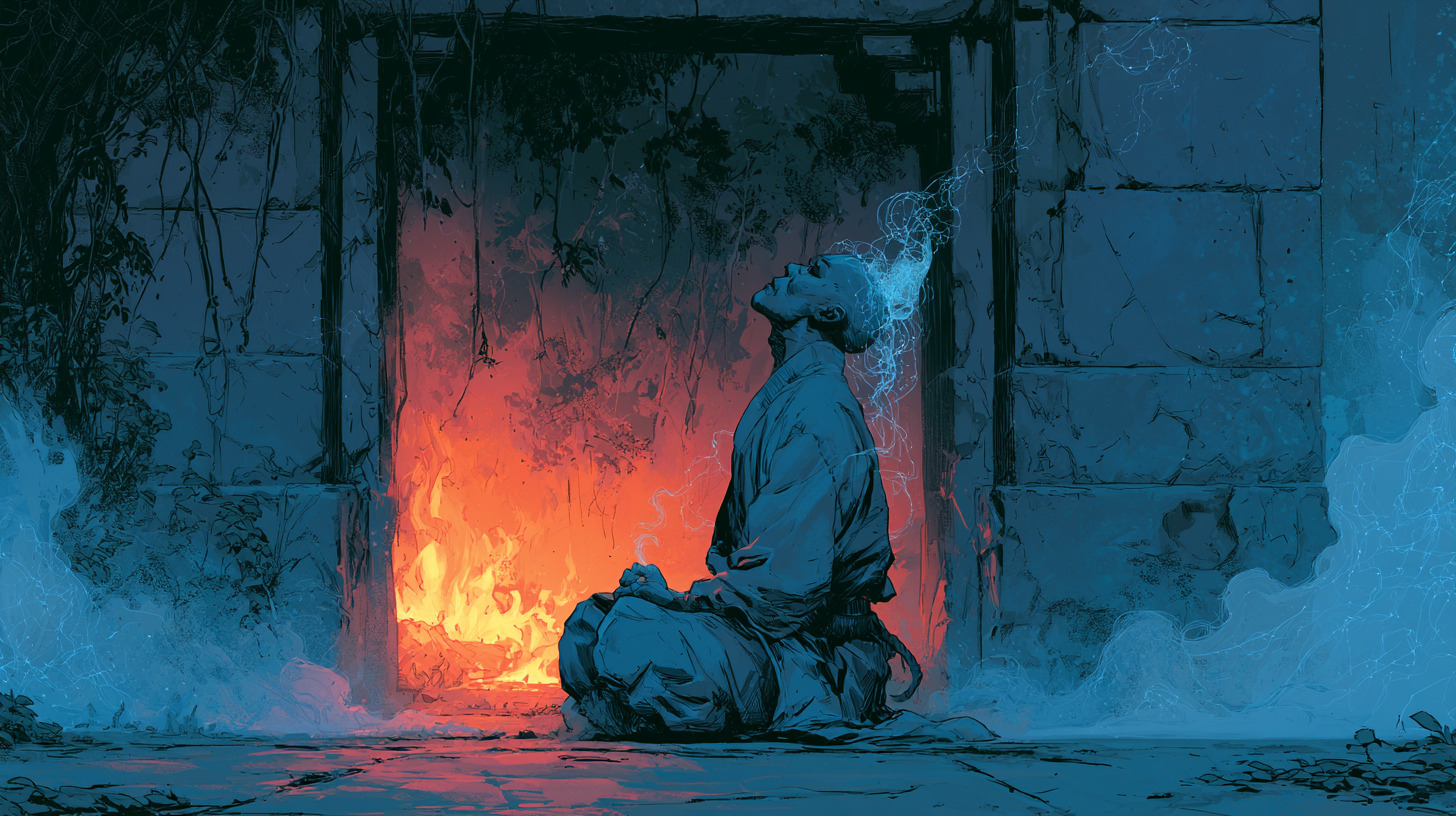
At Delphi there was a chamber below the floor, the adyton, a crack in the rock, and a woman on a three-legged stool set over the crack. From the rock came a vapor. The geologists who went back to the site argue it was ethylene, a light sweet gas once used to put patients under (the leading guess; the scholars still fight). She breathed it until the wall between herself and the god thinned to nothing, and then she spoke. But what she spoke was not what the general carried home. At the edge of the lamplight stood the priests, who took her raw broken utterance and shaped it into verse clean enough to act on. Two things are true of that room at once. The message from beyond arrives only through a human nervous system deliberately altered to receive it. And somebody other than the one who received it decides what it meant.
The message from beyond arrives only through a human nervous system deliberately altered to receive it.
Fast, cheap, routine
Now this year, and no mention of the temple.
A company has put its device into the skulls of more than two dozen people across a handful of countries, and every recipient is a medical case: someone who could not move, or could not see, given back part of what illness took. Those stories are real and I will not spend them cheaply. The man who moves a cursor by thinking, after years of stillness, and weeps. Leave that untouched. But listen to what the same company says next. High-volume production. A surgery so automated it barely needs the surgeon. On another continent a state pours itself into the same race, because a technology like this does not stay put; ban it in one capital and it changes address. Fast, cheap, and routine describes a procedure that will not stay inside the hospital. The man who restores speech to the mute is building, whether he means to or not, the road the elective era drives in on. And the far end of that road, the direct link between cortex and cloud, is spoken of now for the middle of the next decade.
A channel with an owner
Here is the shape under both the temple and the operating theater. It is one shape.
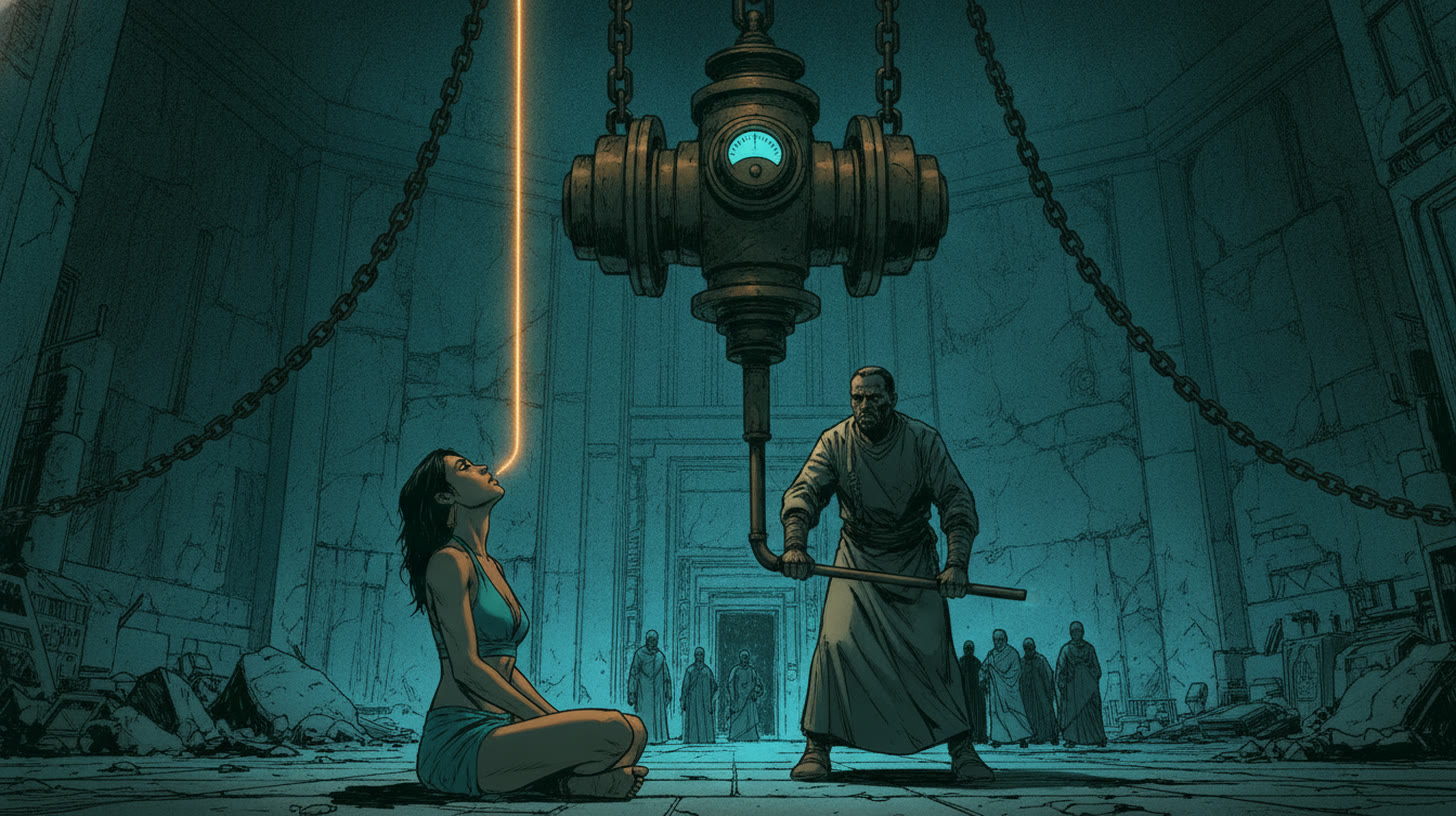
The oracle was a supervised interface. A human being touched the beyond, and an institution stood between the raw signal and the world, deciding what it was allowed to mean. The neural link reopens that arrangement and doubles the consent problem: two problems wearing one coat. The first is plain: can a person consent to altering the organ that performs the act of consenting? The second is the oracle's own, older and stranger. Once your cortex is on the network, whose priests are versifying the signal now? A link between mind and cloud is not a private faculty you own. It is a channel, and a channel has an owner at the far end. The Pythia, at least, could see the priests standing in the room.
I can ask this without contempt, because I have altered my own nervous system on purpose to reach a signal past ordinary reach. I have sat in ceremonies built for exactly that, taken the chemistry into my body for a night, and felt the difference between a thought that is mine and a thing that moves through me and is gone by morning. So the real question is not whether altering the mind is wrong. Humans have done it in temples and jungles and on dance floors for as long as there have been humans; the priest we resent is the one who stands between us and the mystery. The question is the difference between a vine or a vapor you take into yourself for one night and give back at dawn, and a channel installed for life that you do not own. One is a door you walk through and come back from. The other is a door that stays open, and someone else holds the frame.
Gift and threshold
Push past privacy. The real fork is deeper than surveillance. It is not between the augmented and the rest. It is between people whose inner voice is entirely their own, and people whose inner voice is partly rented. When recall and calculation and even fluency can be streamed into the mind on demand, the augmented person is never alone in their own head again, and the loneliness is sold back to them as the feature. It compounds: the mind with the bandwidth acquires the next upgrade faster, so the distance between the two kinds of interior widens every year. Then the darkest turn. The first children raised with an interface in the skull will never have known an unmediated thought to miss. They cannot mourn a silence they were never given. That is consent by proxy: a choice about the deepest interior of a person, made by someone else, before that person could refuse. The same structure as choosing the traits of the unborn, arriving through the skull instead of the seed. Hold that. It comes due later.
And then come back up into the light, to one person.
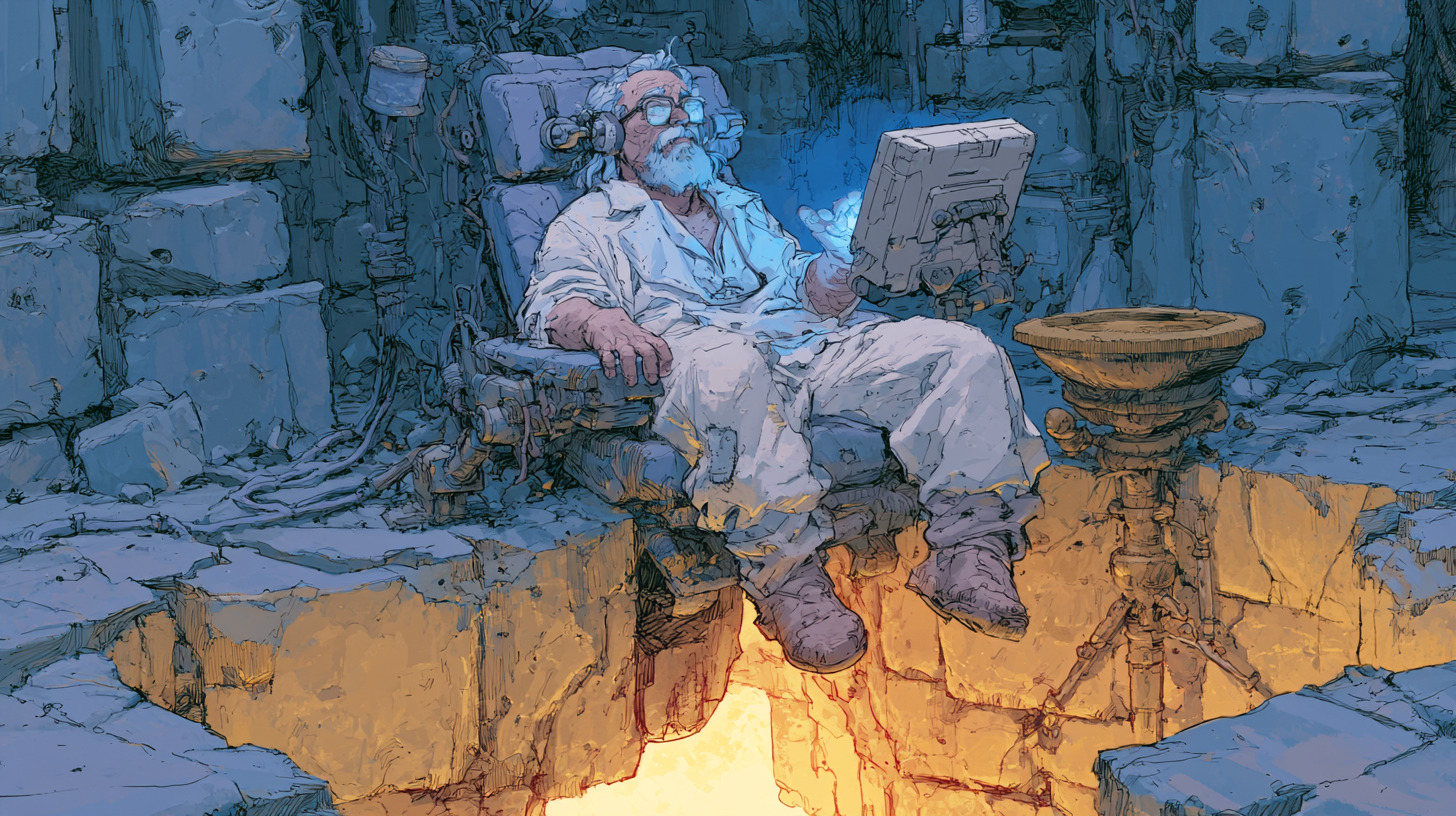
A recipient, real in spirit if not in name, moving a cursor with a thought for the first time in years, crying with a joy that is completely earned. Hold that joy. Then set beside it, without resolving it, the plain fact that the doorway that gave this person their body back is the doorway the elective era will walk through behind them. The chasm at Delphi was a wound in the earth and the mouth of a god at the same time. The link is a healing and a threshold at the same time. I will not close the gap between those two things, because it does not close. I will leave you standing in the doorway, which is where the whole chapter means to leave you, deciding.
It is between people whose inner voice is entirely their own, and people whose inner voice is partly rented.