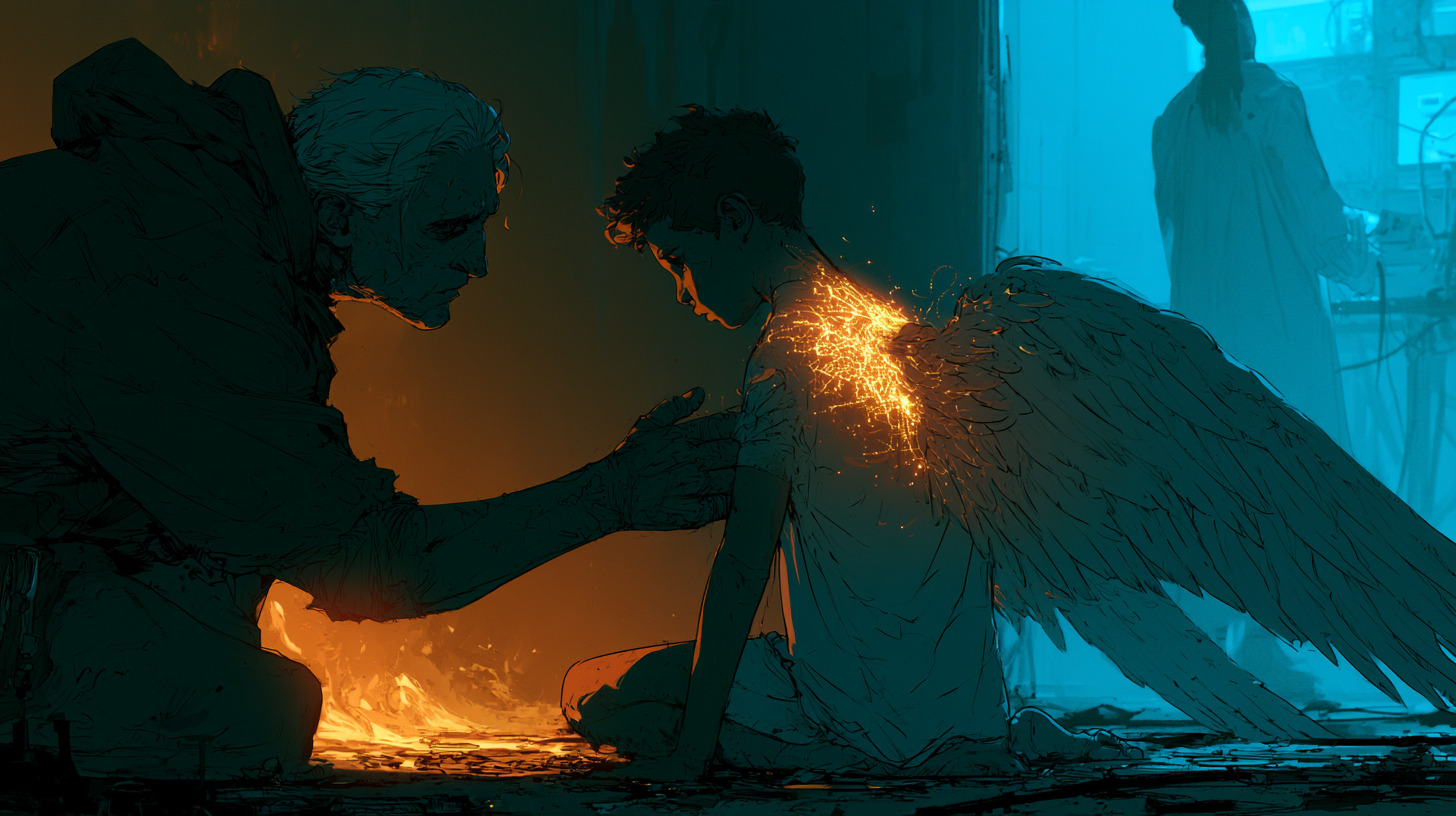
Rewriting the Book You're Already Reading
The genome is a text and you are the text reading itself. Adult editing lets the reader revise the source while still inside the sentence.
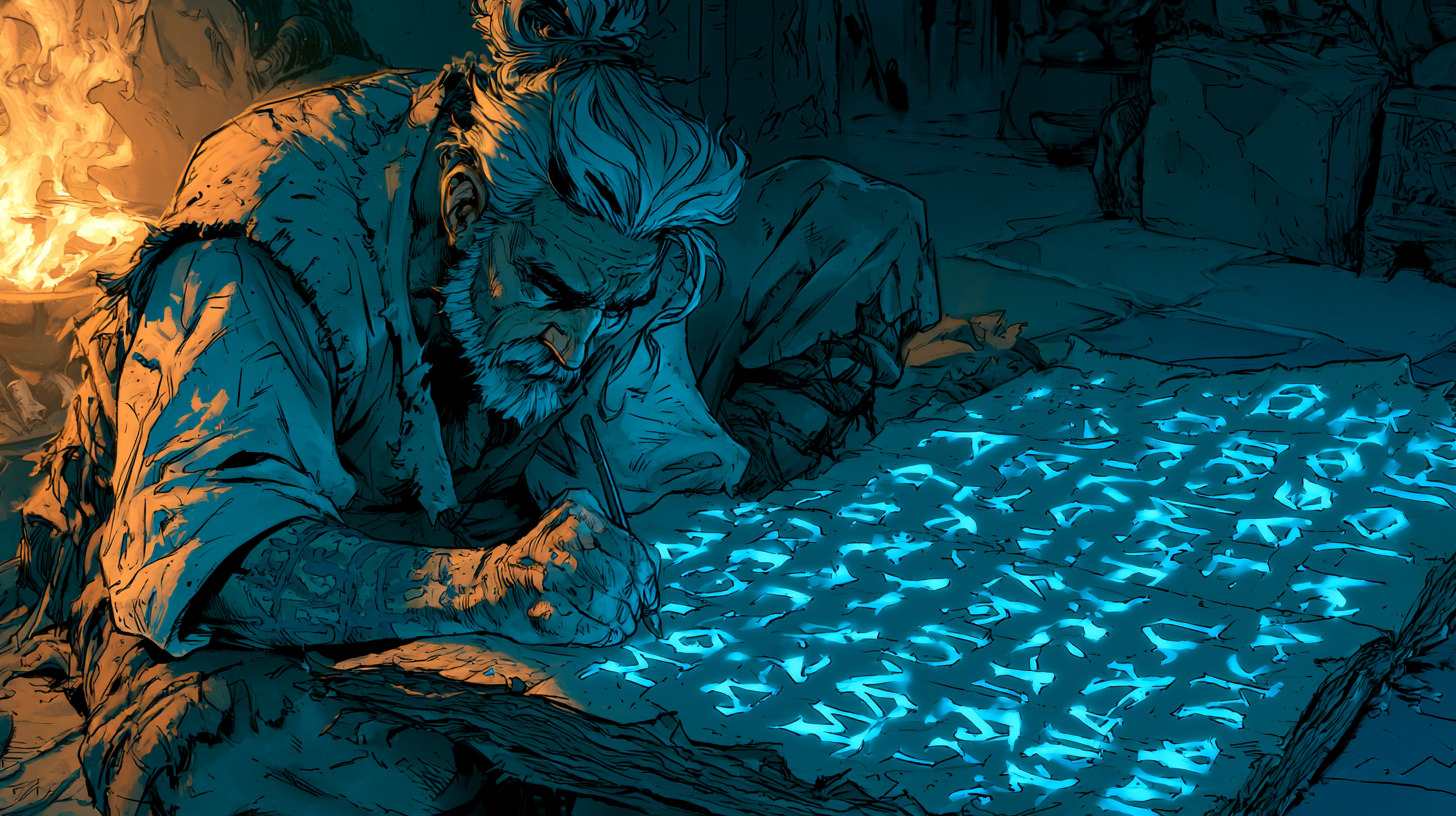
The book reads itself
There is a kind of book that reads itself. This essay is about the day it learns to write in its own margins.
You are the book. Not a metaphor, the plainest description of the thing. The genome is a text, three billion letters, and you are the text reading itself into a person. Longevity gave the reader more pages. Mechanical augmentation bolts a new chapter onto the spine. Adult genetic editing does what none of the others do: it lets the reader revise the source while still reading it, so the one who decides on the edit is changed by the edit. There is nowhere to stand outside the book to proofread it. You are inside the sentence you are rewriting.
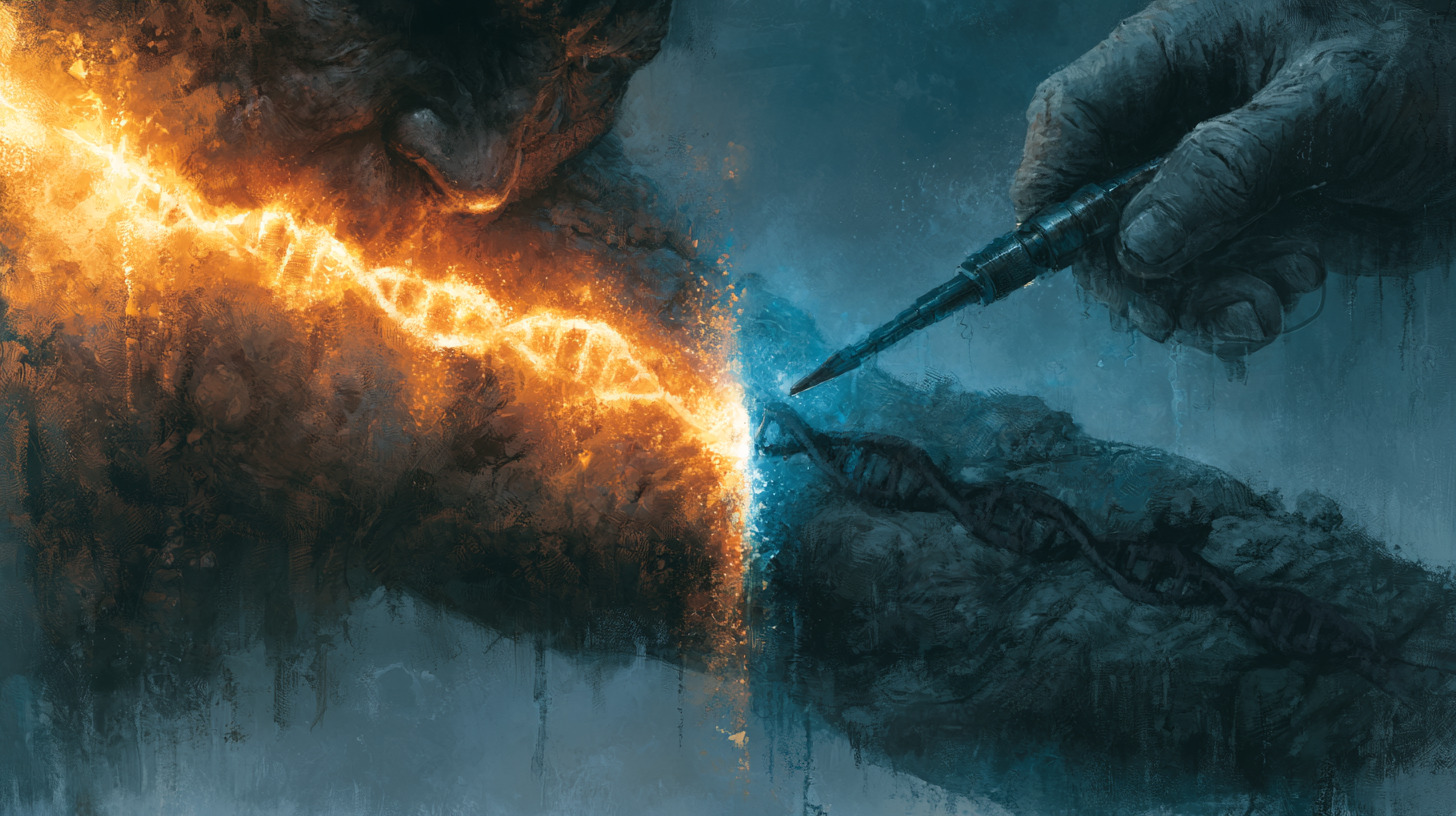
Wings for another body
Daedalus understood this in his hands, which is the only place he understood anything.
He was the great craftsman, the one who could not leave a good thing finished, who saw in every working device a better device it was keeping him from. He built the wings because the sea and the land were watched and the sky was not. The wings worked. That is the part the story never forgives. Not that he failed. That the improvement he could not stop making was worn on another body. He fitted the wings to his son. He gave the warning about the sun, knowing a warning is a weak thing to hang a boy's life on. The maker's appetite and the wearer's body are not the same body. That is the whole of it. Daedalus flew home. The cost of his craft went into the water with someone else's name on it.
The maker's appetite and the wearer's body are not the same body.

Soft places in the map
Now the honest map, because the truth is stranger than the hype.
There is, already, approved and real, a genetic medicine that cures. A somatic CRISPR therapy for sickle-cell disease goes into a suffering body and edits the error out. That is a cure, and a good, and I want it kept clean of everything that follows, because it is not the fork. The fork is the next word, enhancement, and there the map goes offshore and quiet. There is no approved genetic enhancement in any human being anywhere. There is a trajectory with three markers. The proof of concept: a herd of goats in China, muscle-suppressor and hair-suppressor genes switched off, born a decade ago with bigger muscles and longer fiber: enhancement, not cure, already grazing. The gray edge: athletes and clinics in the jurisdictions where the rules do not reach. And the shadow: the man who already crossed the line in humans, went to prison, came out, and set up a lab again. He belongs to a later and graver essay. I name him only as proof that the line is not a wall. It is a border, and you cross a border by changing which country you are standing in.
Say it flatly. Regulation does not stop the frontier. It sorts it geographically. Ban the thing in one capital and it does not die. It emigrates, because no nation can refuse an advantage its rival will not refuse, and a technology that confers an edge in a race with no referee gets built somewhere. There is no world government of the genome. There is only the map, and the map has soft places in it.
Regulation does not stop the frontier. It sorts it geographically.
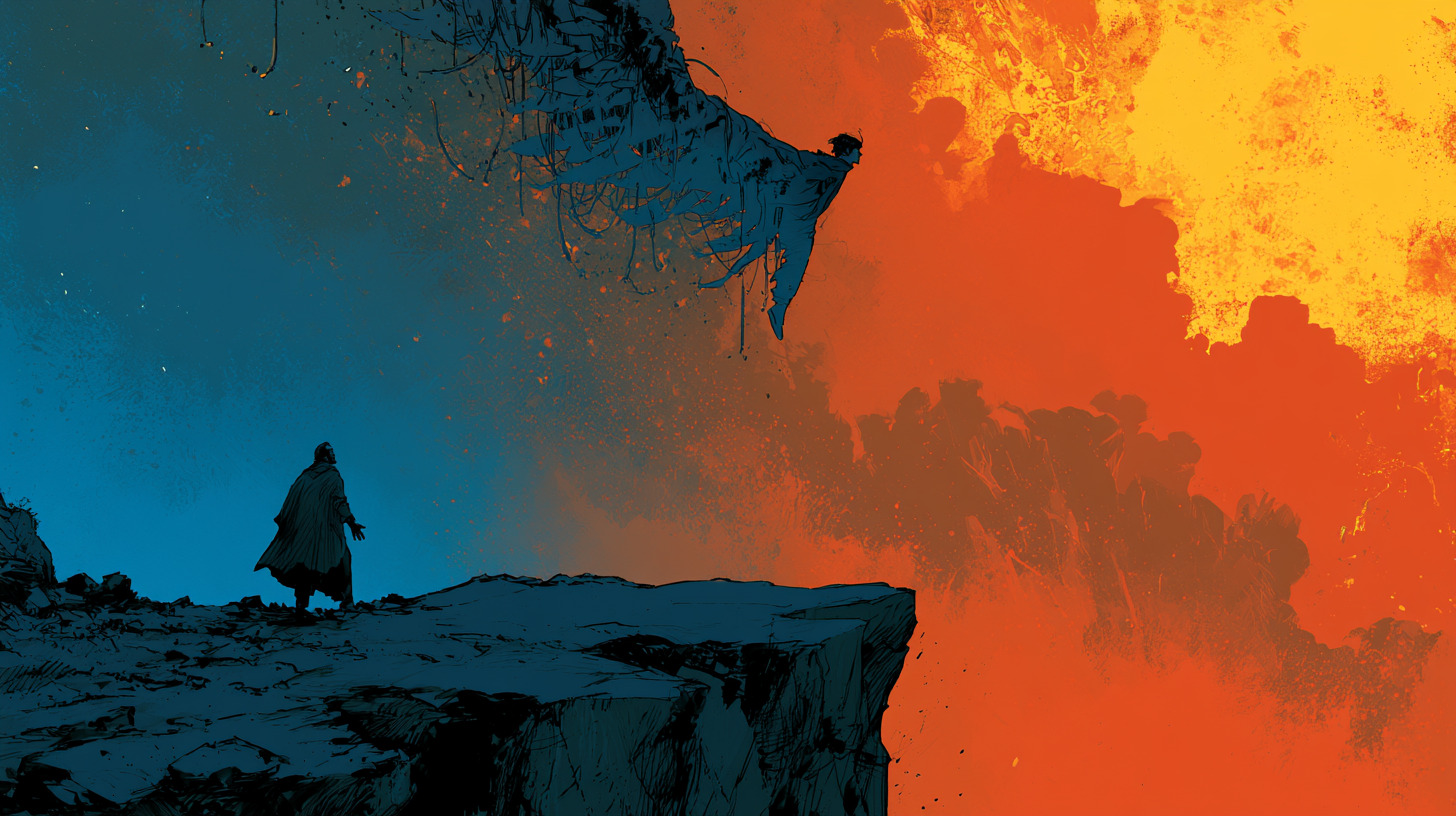
The given and the chosen
Underneath the map is the thing I keep circling: the self as a story being told. I said once, or someone said it back to me and I kept it, that the frightening thing was the story that changes while it is being told, the present and the future collapsing into each other until there is no gap left to think in. That is exactly this. The genome is the oldest story, the one that wrote you before you could object. The enhancement era asks whether that story is a text to be read with reverence or a file to be freely edited. The given and the chosen. In my shorthand, the zero and the one. The zero is what you were handed, the body as it came. The one is the will, the choosing hand. Adult editing is the one reaching all the way down into the zero: the storyteller leaning into the page, revising the character mid-thought, and calling it an improvement, the way Daedalus called the wings an improvement.
Run the four turns. The body becomes designed, an authored text, not an inherited accident. Elective, which means priced, which means sorted, now between nations as much as between people. It stays, for now, within a single lifespan, the one mercy that keeps this essay distinct from the grave one coming: what you edit into yourself dies with you. And it diverges rather than diffuses, the edited pulling further from the unedited by design. Three of those four are the fork's usual shape. The fourth, the single-lifespan limit, is the trip-wire, because the only thing holding the edit inside one body is a taboo, and this chapter is the record of taboos being emigrated around.
So the mercy of adult editing is also its trap. One body, one life, no inheritance: reversible in the deepest sense, because it ends. But a population that has normalized rewriting the living, in a race with no referee, is rehearsing the choice it will one day make on someone who cannot consent. Daedalus fitted the wings to the son. The appetite was the father's. The body was the boy's.
The appetite was the father's. The body was the boy's.
Why stop at the text
And if you can rewrite the text the body was born with, the next question writes itself. Why stop at the text. Why not add a chapter it never contained: a sense, a limb, a channel the genome never had a letter for. That is the next essay, where two people first stand in one room and hear two different worlds.