What Is a Human For?
The machines take the work, and the wage was never the whole of it. The question is not how people will eat. It is how people will matter.
The wound answered
The oldest dream of labour without labourers is three thousand years old, and it belonged to a cripple.
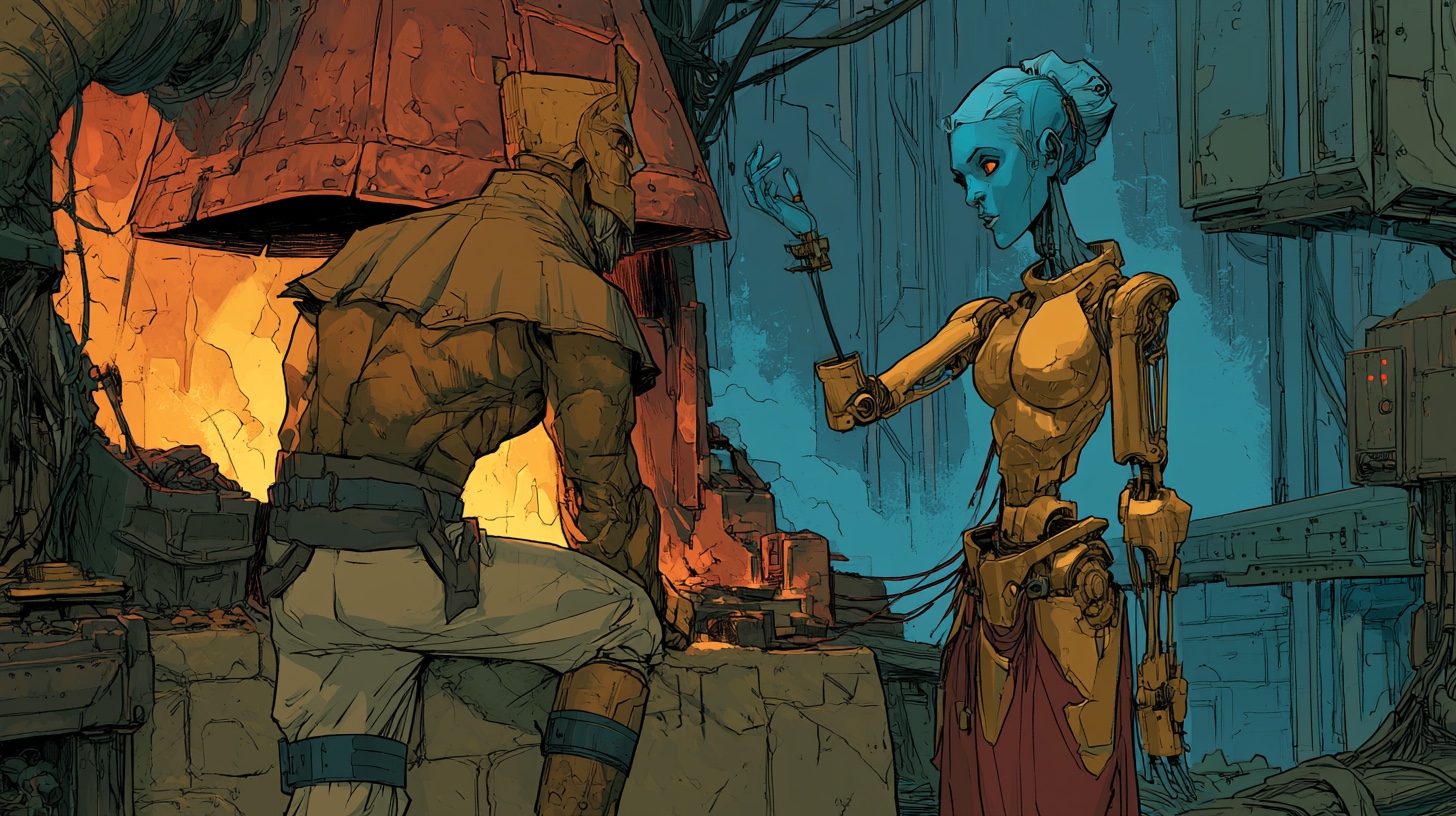
Hephaestus was the smith of the gods, thrown from heaven for the crime of being born wrong, and he limped through an immortal life. So he built himself helpers. In the old poem there are handmaidens made of gold who move and think and speak, and tripods on wheels that roll themselves to the feast of the gods and home again. The maker who could not walk built a world that came to him. Notice who dreams this first. Not the master with a whip. The wounded one, the one the economy of bodies had already discarded, who needed the work done and could not do it. The dream of made labour is not, at root, a dream of domination. It is a dream of the wound being answered. Hold that. The machines are arriving now, and it is not the gods who are about to be served.
It is a dream of the wound being answered.
Two fronts closing
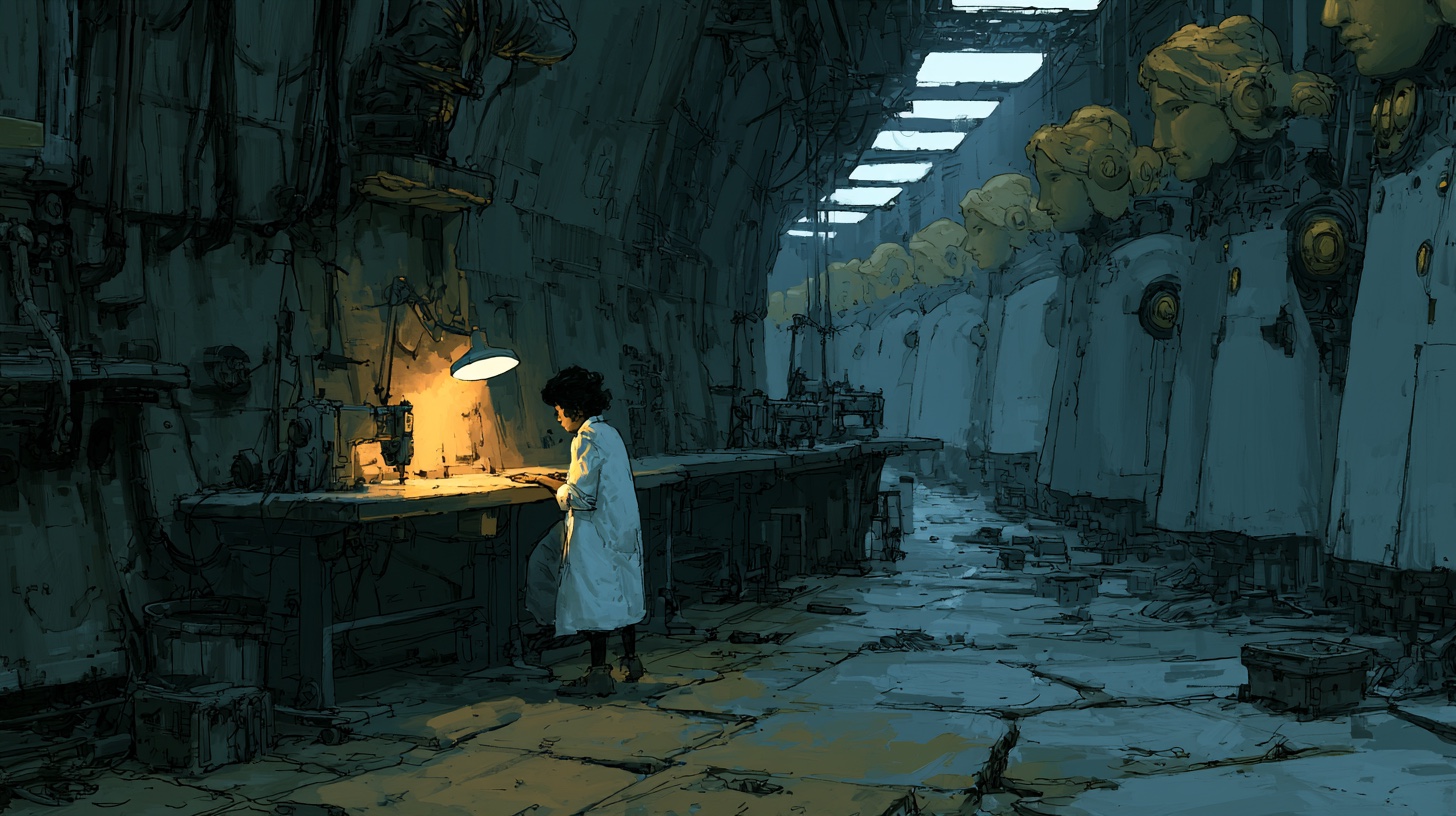
They are crossing over as I write this, out of the demonstration video and into the warehouse. Humanoid machines (American firms, the Chinese state programs that will not be outpaced) walking, lifting, learning to fold and sort and carry. That is only the visible half. The other half has no body: software quietly eating the cognitive work a whole global middle class was told was the safe high ground. Two fronts, the hand and the head, closing at once. And the thing never said plainly in the rich world where the story gets told: it lands first and hardest on the economies that industrialised last: the garment floors, the call centres, the fields; on workers sold labour as the ladder up, watching it pulled while they are halfway. The post-work paradise is a view from the top of the ladder. Name who is standing under it.
The patch on offer is money without work, and the honest pilots exist, and their results are real and mixed. But watch the shape of the offer: it answers the wrong question. It answers how will people eat. It never touches the question underneath, the one the machines force into the open for the first time in history. Not how will people eat. How will people matter.
Not how will people eat. How will people matter.
Load bearing
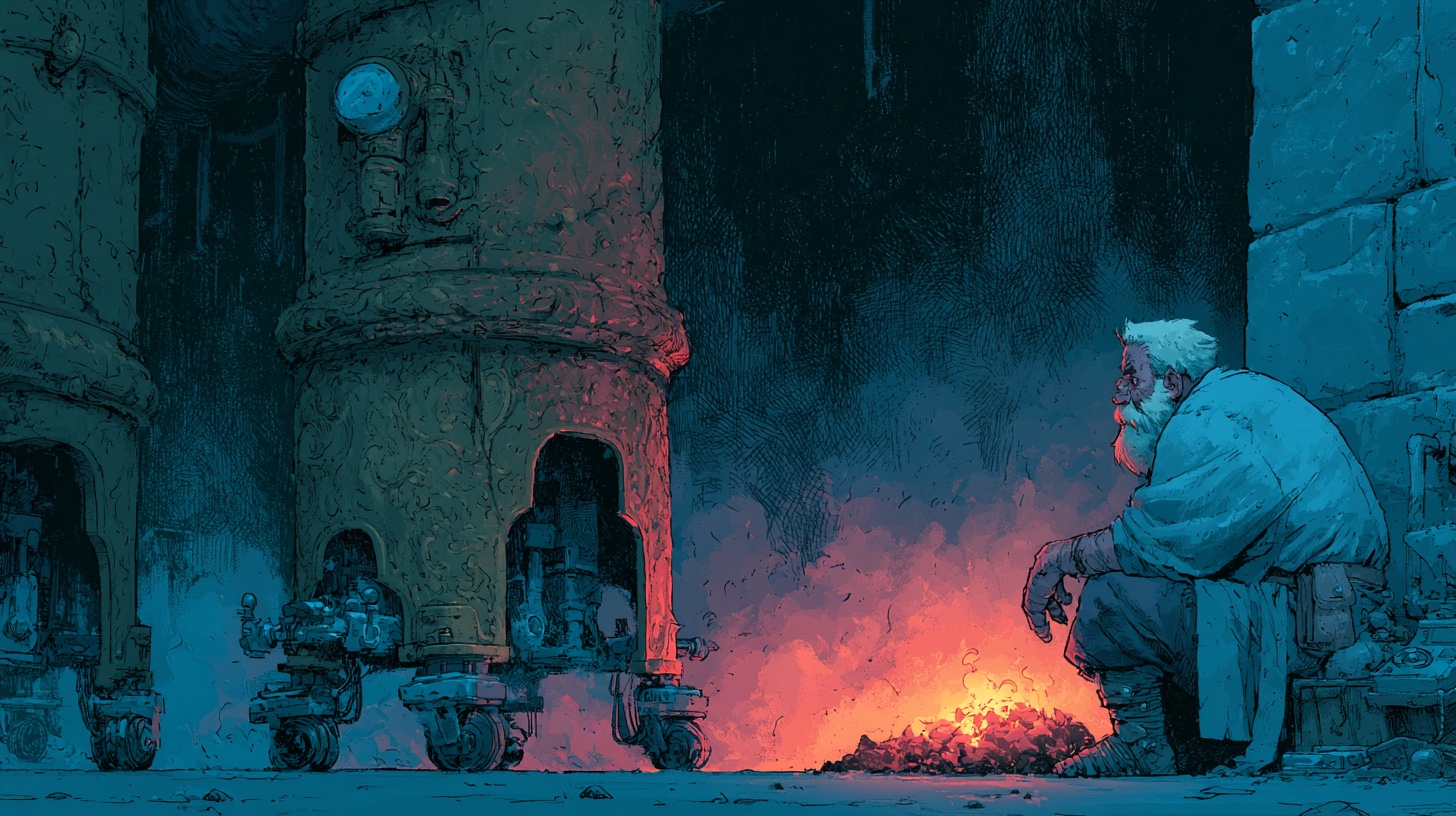
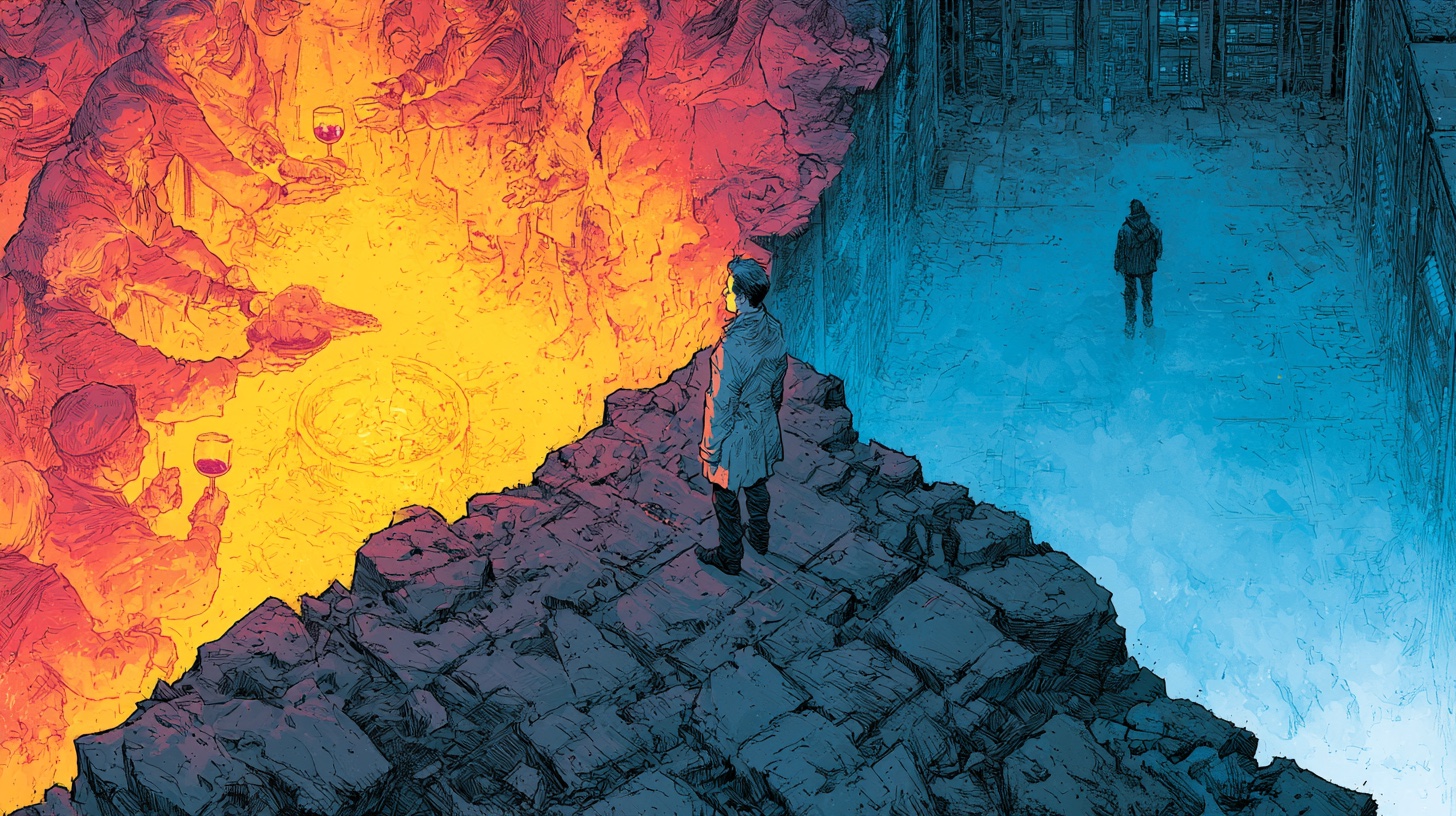
Because work was never only survival. Go back to the fire. Five days before a war, in the old telling, everyone in the village is pushed to their best: the strong, the weak, the ones the world had written off; each one finding the thing they can bring, because the moment demands all of them. A festival does the same without the blood. Everyone comes, everyone brings what they have: the wine, the music, the one small gift that is theirs. And in the bringing each finds their place in the whole. That was work, underneath the wage: the mechanism by which a human being found where they fit and what they were for. Let the machines do the carrying and the counting and you do not free that mechanism. You expose it, standing there with nothing to do, and you discover it was load-bearing.
So the fork here runs not through a body but through a society, and it opens two futures out of the same machines. In one, the toil is lifted and the human turns to what was always the point: the making, the caring, the festival no one has to be dragged to. In the other, the human is simply redundant, no place, no contribution, no answer. And there is a particular despair reserved for mattering to nothing. The machines do not decide which. The machines are indifferent. Who owns them decides, and how the yield is shared, and whether a culture has kept any story of human worth that is not a story about productivity. And the same machine will do both at once: liberate the nations that build the machines and strand the society that supplied the labour it replaced.
You expose it, standing there with nothing to do, and you discover it was load-bearing.
How will people matter
Run the four turns, this time on an economy and not a cell. Designed: an economy authored, not grown. Elective for the ones who own the machines, imposed on the ones whose work is erased, who elected nothing. Once built, a ratchet that does not turn back. And it diverges rather than diffuses: the gap between owners and displaced hardening into structure, and globally, between the builders and the nations automated out of the conversation. The same shape as every fork in this book, drawn this time across the whole human division of labour.
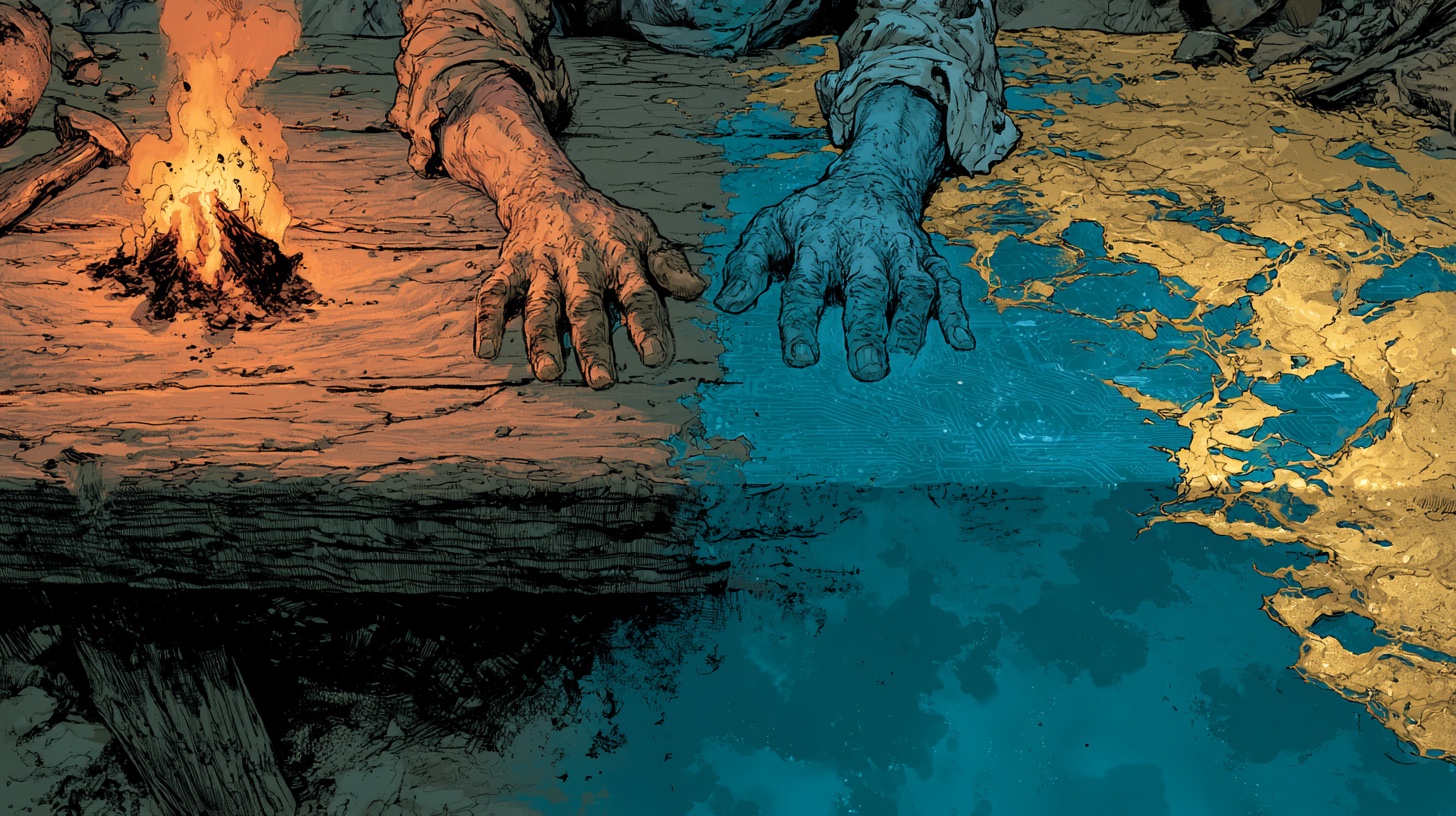
Which returns me to the question the last essay handed up the stairs, the gravest one, ending on this: what is a human for. I said there that everything before the germline was rehearsal and everything after was aftermath. Here is the first room of the aftermath. When the machines do the work survival demanded of us, we are not answered. We are asked, finally, with no way to dodge it, what a human is for when staying alive is no longer the job. Hephaestus built the golden servants because he was wounded and needed the world to come to him. We are building them because we can, and we have not yet said what we will do with the hands that come free.
A species that cannot answer, freed from toil and empty in the freeing, will do what restless peoples have always done when the place they are in has no place for them. It will look for somewhere else to go.
we have not yet said what we will do with the hands that come free