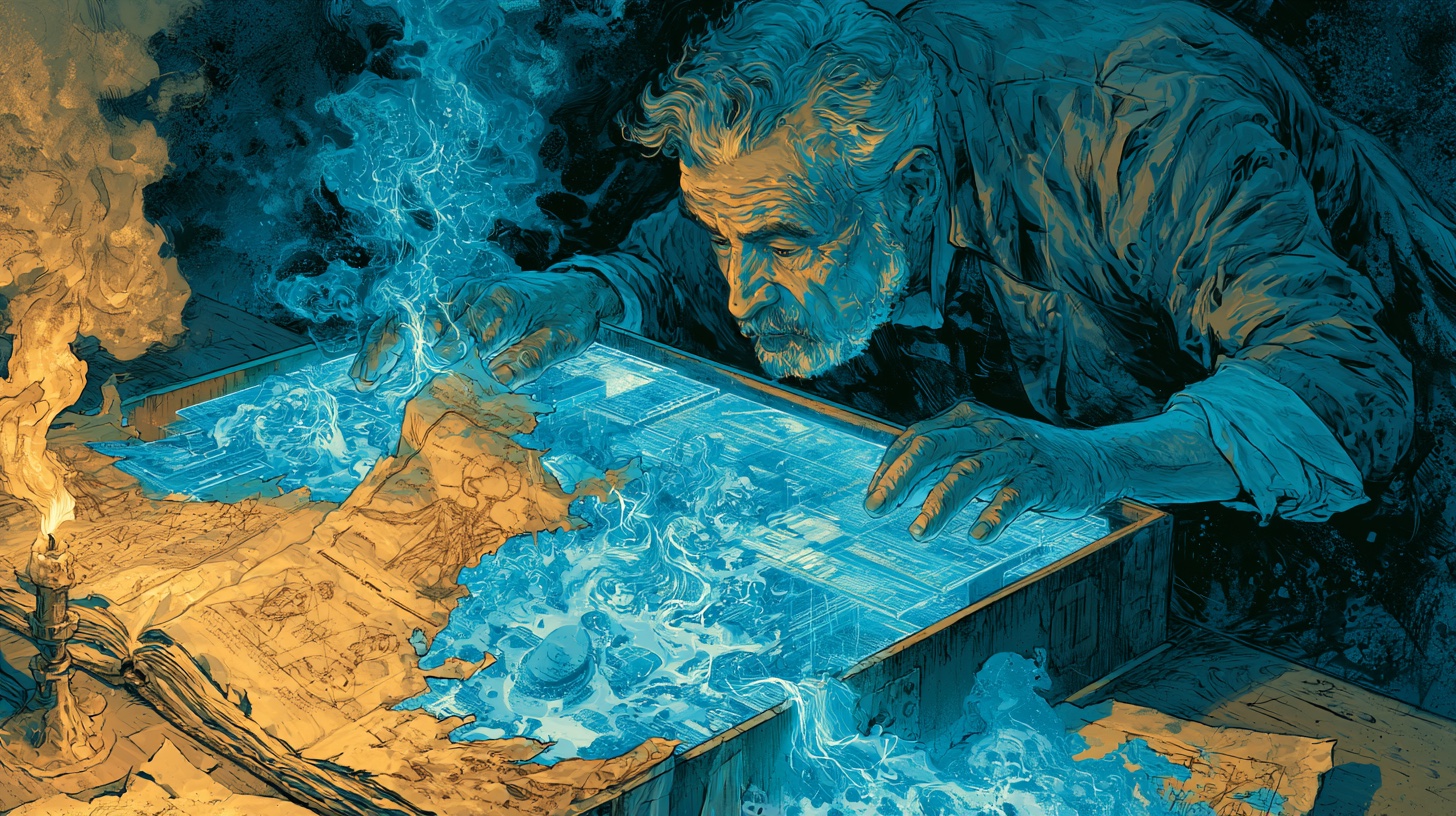
The Mystics With the Notes Suppressed
The fathers of reason arrived by the mystic's door, and their families locked the room. The fork threatens to finish that edit in the flesh.
The locked room
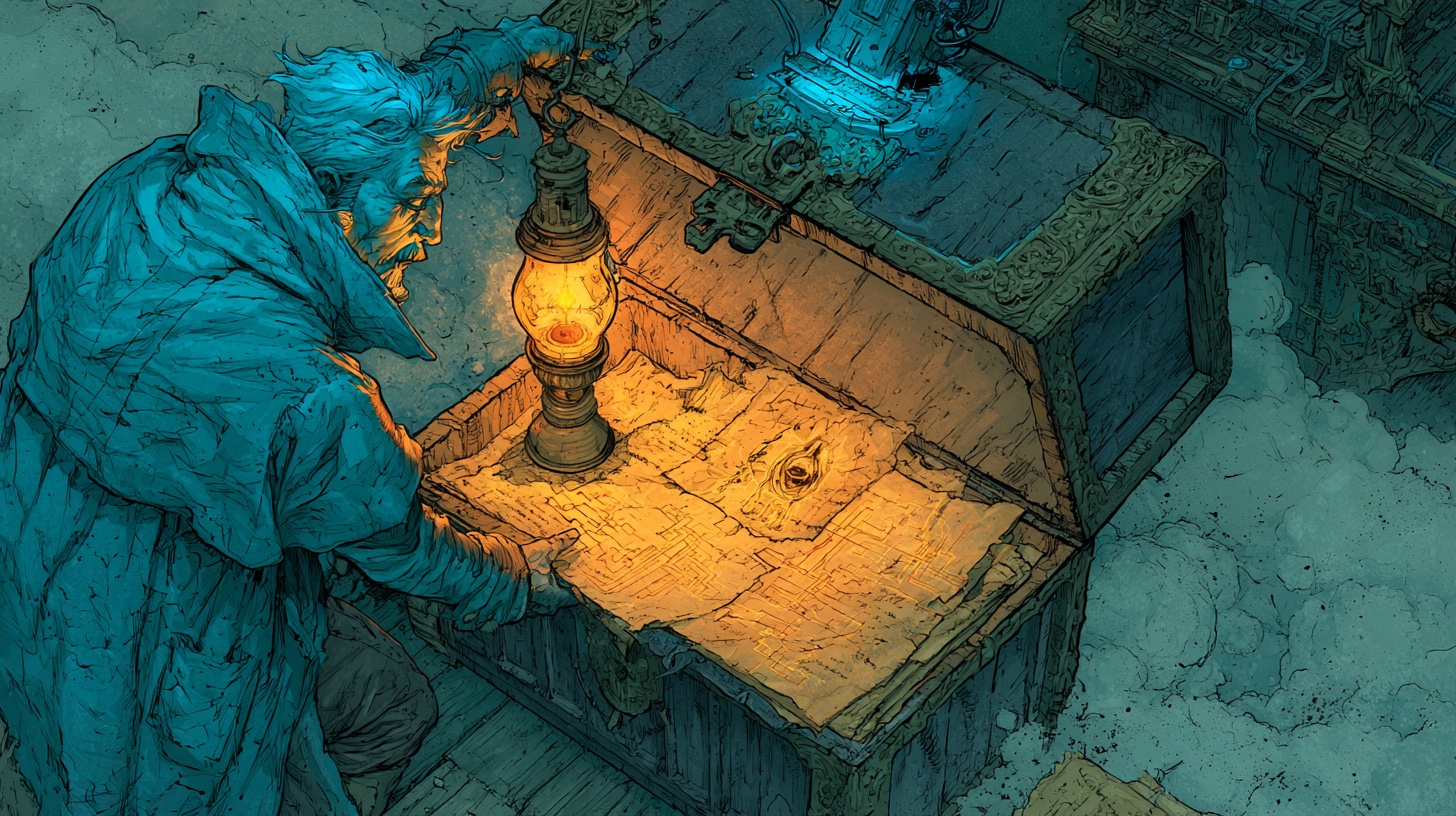
There is a room, in the record of almost every man we were taught to call a father of reason, that his family locked before they let us in.
Newton left more words on prophecy and the hidden workings of God than on gravity. He read the dimensions of Solomon's temple for a code. He spent his nights on alchemy, chasing transmutation as though matter itself were a language he could learn to speak. When the estate's boxes, kept quiet for two hundred years, finally went to auction, this fell out: not the calm founder of the clockwork world but a man on his knees before a universe he believed was signed. Descartes gave us the cold method, I think therefore I am, the mind sealed off from the machine of the body. He also located the soul in a small gland behind the eyes and dated his whole philosophy to three dreams in a November night, dreams the tradition calls visions, angels, a voice. Angel or fever, no matter. The method arrived by the mystic's door, and the door was later bricked up.
We did not inherit the mystics. We inherited the edit.
We did not inherit the mystics. We inherited the edit.
The war's window
At twenty-two I wrote an equation I did not understand. Zero equals one. I meant it as the deepest thing I knew and could not have told you why. Years later, older, into a recorder, I reached for Newton and Descartes and said the thing I still believe: they were mystics, both of them, in touch with an intuitive and magical way of knowing, and their families suppressed those notes so as not to lose their credibility. So history remembers the rational fathers and forgets the men obsessed with the other side of themselves. At thirty I thought I was describing two dead men. It was never about them. The suppression was a whole civilization choosing. It chose the one and buried the zero. It called reason the truth, intuition an embarrassment, and the burial progress.
Then reason walked all the way down its own hall and came out the far door: the mystic's door, there the entire time.
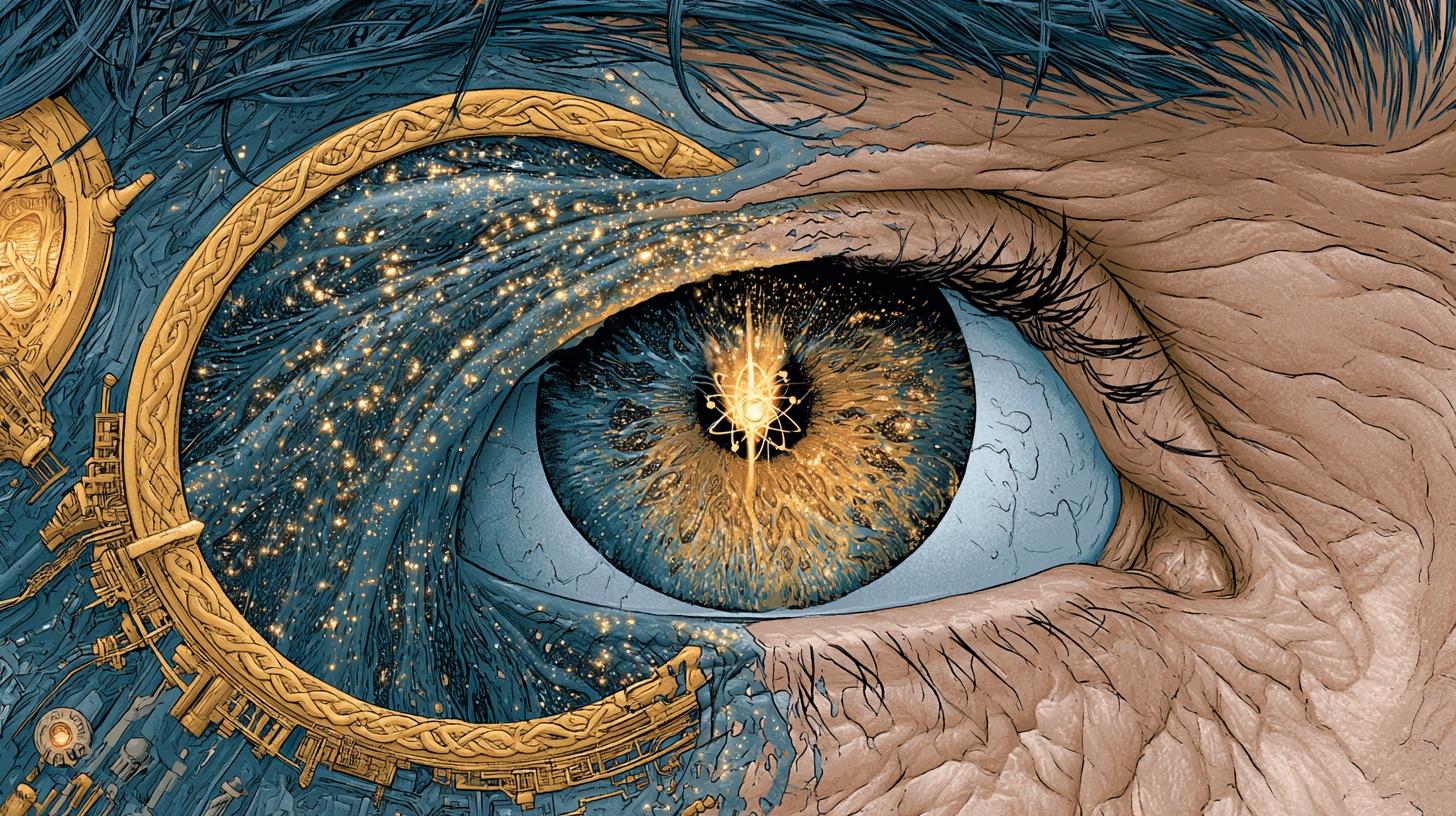
The turn is history, not metaphor. In the span of the second war, two things happened that are almost never told together. We split the atom, and learned that matter and energy are one thing wearing two faces: that broken all the way down, the world was never solid, that at the smallest scale it stops behaving like a thing and starts behaving like a question. And in a lab in Switzerland, in that same window, someone synthesized a molecule that could reach into a mind and open it onto exactly that. Not one calendar year: the war's window, chain reaction to discovery to bomb. But they belong to one moment. Physics reached the floor of matter and found no floor. Chemistry reached into perception and found it could be tuned.
Both found, from two directions, the thing the mystics had been suppressed for saying. The observer is not outside the experiment. In the strangest reading of the new physics (one interpretation, the field still argues), measuring decides whether the world shows up as particle or wave. The watcher is in the equation. Subjectivity left the back row and became a variable on the page. That is the pendulum coming back through the back door, down the hallway that led out of the rational. Newton and Descartes would have understood it immediately. It is the thing their journals were locked for.
Remember the ear
Now remember the ear.
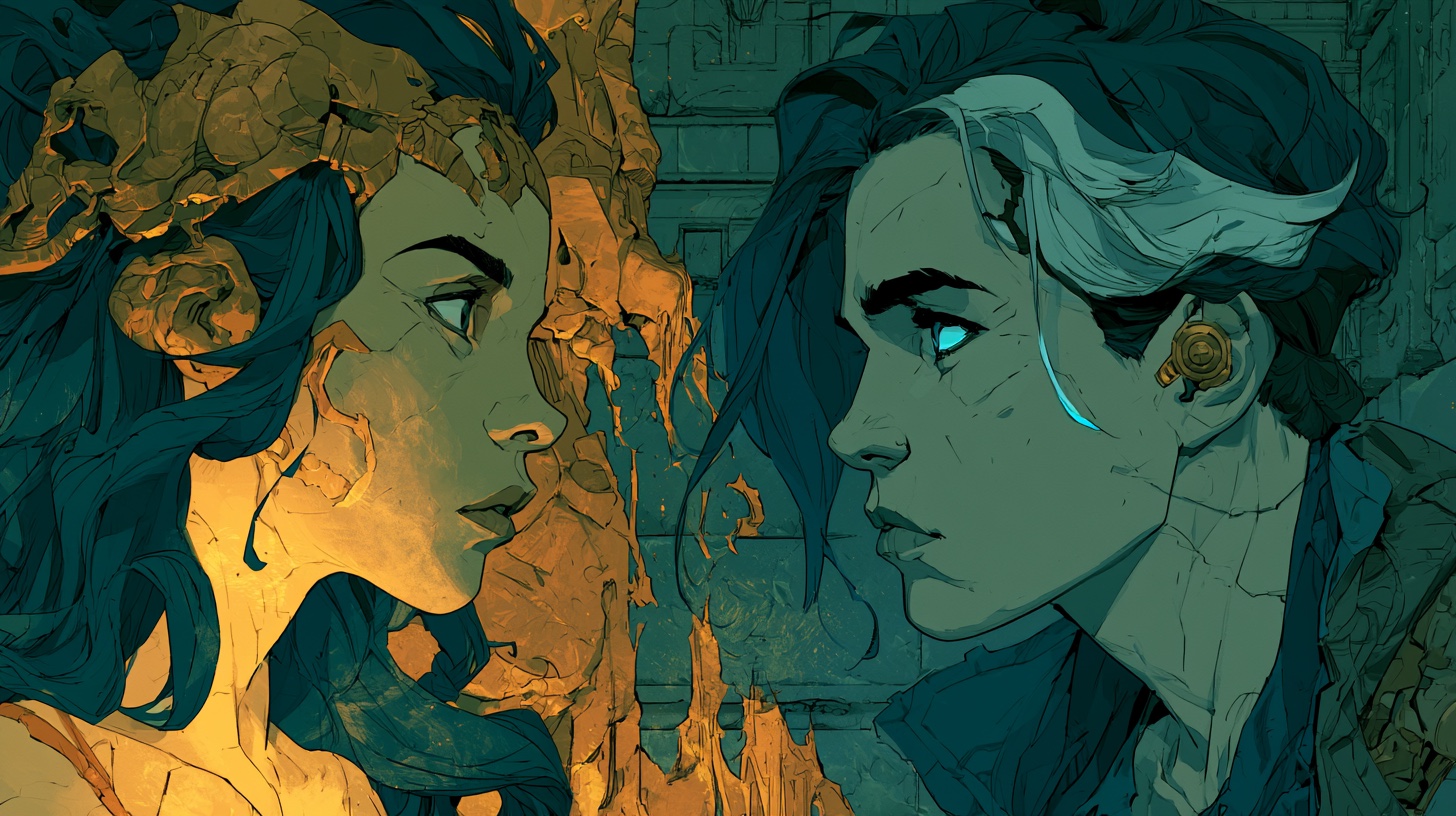
Two people in one room, and one of them turned toward a sound that, for the other, had not happened. I told that story a few essays ago and left it unfinished, on purpose. Here is the rest. In 1943 the observer entered the equation, but every observer still ran the same hardware. The wave was strange, but it was one wave, and we all collapsed it with the same eyes and the same ears, so we could still argue about what we had seen. The shared instrument held. The fork industrializes what that wartime window discovered. It does not merely let the observer collapse the wave. It manufactures the observer. It builds the eyes. Descartes put the soul behind the eyes; we are now selling the eyes. The mystic's private vision, the thing his family hid to protect him, becomes a retinal implant with a price and a waitlist.
It does not merely let the observer collapse the wave. It manufactures the observer.
Amputation
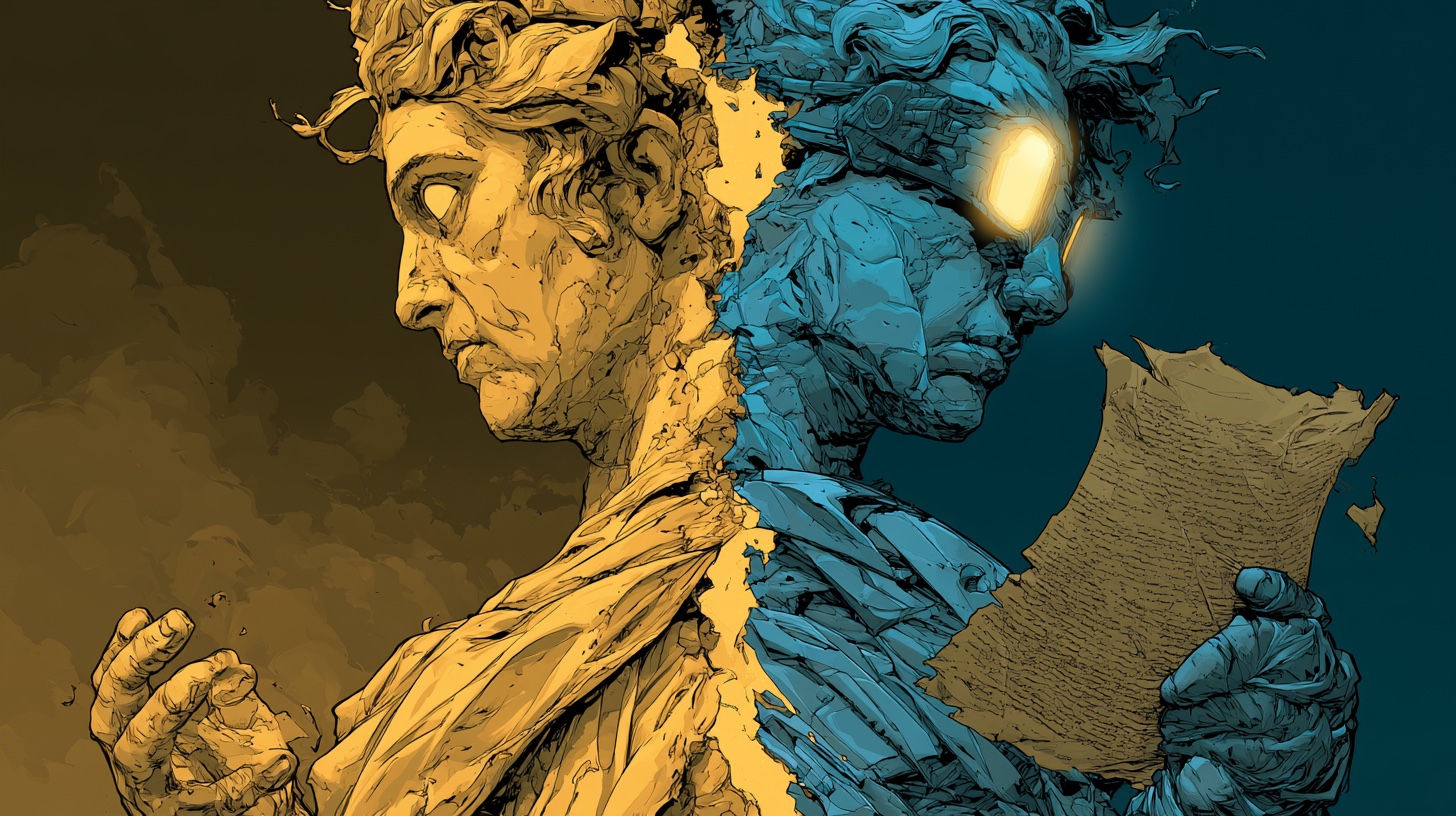
The real tragedy is not the machines. Reason was never the enemy of the mystical. The zero and the one were never two camps at war. They were one body (in Newton, in Descartes, in the boy who wrote the equation and could not read it), carried together and made to hide one half. The fork threatens to finish, in the flesh and forever, what those families did to their fathers' journals: cut the one body in two, the refusers keeping the zero, the augmented buying the one, neither able, after a while, to read the other's hand on the page. That is not augmentation. That is amputation, dressed as progress, performed at the scale of a species, calling the missing half a superstition.
The drawer
The pages were only ever suppressed. Someone kept the boxes. The choice stayed reversible for two hundred years because it was one body and the notes were still in the drawer.
The question the last essay leaves you with is what happens when the notes are not suppressed but surgically removed. When the zero and the one become two kinds of human being, and there is no drawer, no descendant, no auction two centuries on where the other half falls out. Who is left, then, who can still read both hands of the page.
Who is left, then, who can still read both hands of the page.